
Many patients asked me time to time their expectation from acupuncture treatment would be very high just like as the magic needle. There are no magic needles you expect. Everything is going as step by step. Your problem, if you have the chronic conditions, is getting worse during the times. So, the treatments might be needed with the proper time and sessions. That meaning is that you need to be patient.
The musculoskeletal disorders are the quite common disorders at the daily practice. Nowadays, they are frequently seeing those patients in my practice.
Therefore, I’ll discuss and mention those issues as follows for my patients’ references in order to understand their problems. I’ll update the below contents time to time when I have time available.
Lower Back & Hip Pain Relief Through Gentle, Targeted Acupuncture
Any interactions between medications and acupuncture
Acupuncture is natural, drug‑free treatment to ease pain, improve mobility, and restore comfort.
That meaning is even if you are taking the medications such as anti-inflammatory medications, muscle relaxant, and pain killer, etc, the acupuncture is not effecting your medications’ effect.
Acupuncture is using the bare acupuncture needles without any medications, which is made by the stainless steel.
Section 1- Understanding Lower Back & Hip Pain
Why these areas often hurt together?
Lower back and hip pain frequently overlap because the muscles, joints, and nerves in this region are deeply interconnected. When one area becomes tight or inflamed, the other often compensates — leading to persistent discomfort.
Common causes
- Muscle Inflammation with Muscle Spasms with Tension and/or Strain
- Sciatica and/or Nerve Irritation due to the inflammation
- Sacroiliac joint dysfunction
- Facet Joint Dysfunction with Inflammation
- Hip Joint Inflammation with Posterior Sacro-iliac Ligament Inflammation and/or Posterior Sacro-tuberous Ligament
- Poor posture or prolonged sitting
- Sports or work‑related injuries
- Exercise Related injuries
- Gardening related injuries
- Heavy lifting things on home, garden, work place, gym, fitness centres, etc
– Understanding Greater Trochanteric Bursitis
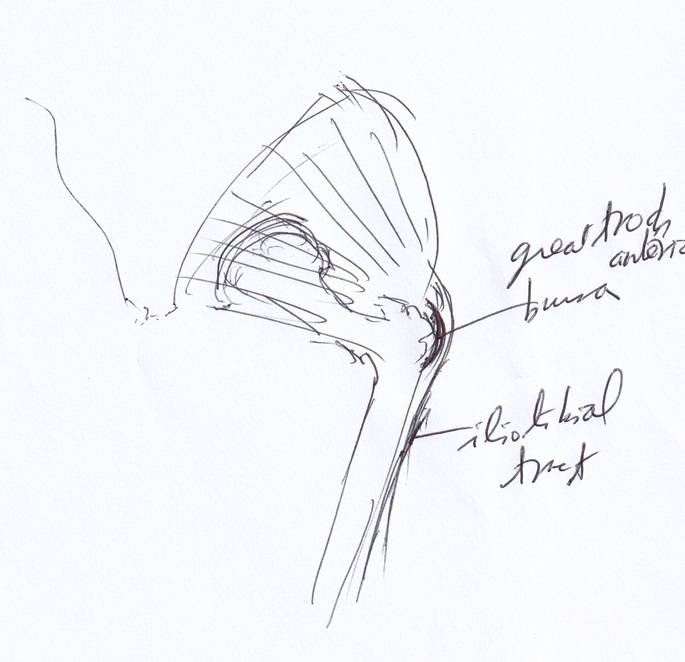
As you can see above diagram, the Greater Trochanteric Bursa is located under Iliotibial Tract above the Greater Trochanter. The Greater Trochanteric Bursa is acting to prevent the friction between Iliotibial Tract and Bone(Greater Trochanter) as like ball bearing. If there is not Greater Trochanteric Bursa, what is happened? Your tendon which is Iliotibial tract will be torn , eventually, after you are using your leg. However, if you are using your body under specification, you don’t have any trouble.
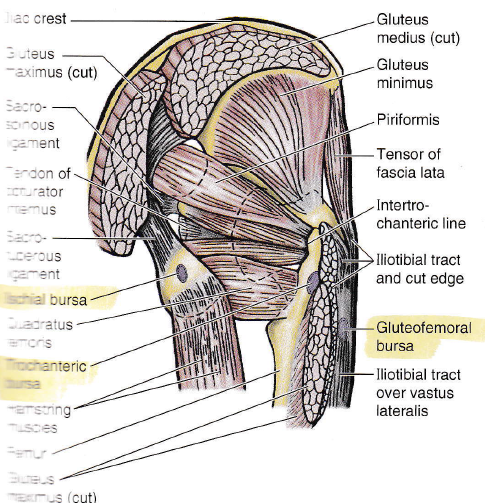
As you can see from the above diagram, trochanteric bursa is not just one. It is located at the lateral greater trochanter and behind greater trochanter. So, above picture is showing the exact location for trochanteric bursa. This bursitis is also quite common disorder in the daily practice.
The patients reported me that they had the corticoid Steroids injection and/or medication such as Endap, which is a brand name for amitriptyline which is a prescription medication, tricyclic antidepressant (TCA) used to treat major depression, chronic nerve pain, migraine prevention, and nocturnal enuresis (bedwetting)(https://en.wikipedia.org/wiki/Amitriptyline#:~:text=Amitriptyline%20is%20indicated%20for%20the%20treatment%20of,than%206%20after%20other%20treatments%20have%20failed.). It works by increasing serotonin and norepinephrine levels in the brain to improve mood and manage pain. However, those treatments are not treating the root problems but just masking the pain. So, when the effect of the medication is vanished during the time, your pain would be coming back. Because the medication may help you that you don’t feel the pain temporally. But how long do you need the medications? Would you like to take the medications for long times?
But we are always making challenge by ourselves to do something such as lots of hiking, lifting heavy objects time to time. For example, if your weight is 60 kgs, and you are lifting and carrying a bag of 20kgs, you are carrying the weight of 80kgs. And furthermore, if you are moving with a bag of 20 kgs, you are actually carrying 2 x 80kg = 160 kgs. It is lots of weights. That meaning is that if you are lifting for a short period of time, it’ll be okay. But if you are doing for a while, your body is strained and eventually your body would be damaged.
– Understanding Ischial Bursitis
As you can see from above diagram, you can see an ischial bursa which is located at the Ischial Bone and Hamstring tendons. What is Ischial bursa doing?
It is preventing the friction between Ischial Bone and Hamstring tendons. Usually, it is okay. However, by any reason such as sudden sprinting, hiking, it would be damaged. For example, if the Hamstring tendons are pushing and flickering too much to the Ischial Bursa, the Ischial bursa is damaged, leading to the inflammation of the Ischial bursa.
The inflammation of the Ischial Bursa are causing the pain at the local area, burning sensation, and tingling sensation down to upper leg, behind knee, and lower leg.
– Understanding Piriformis Muscle Syndrome
Piriformis muscle syndrome is quite commonly seeing in the daily practice, which is similar to Sciatica due to the problem of lower back. However, the Piriformis muscle syndrome is coming from the major hip muscle, Piriformis muscle.
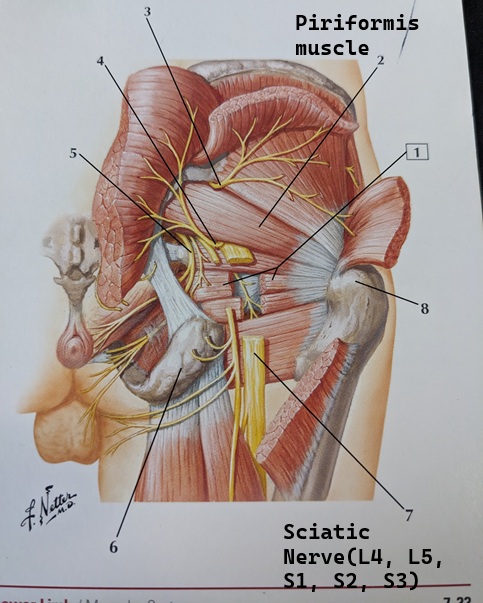
As you can see from the above diagram, the Piriformis muscle is located at the centre of hip muscles connecting between anterior surface of Sacrum bone and Greater Trochanter of Femur bone. So, it is very strong muscle supporting your weight
– Understanding Lower back pain
If you have any experience of lower back pain, most of patients are explaining that the lower back pain is really terrible.
So, I thought that every patients are needed to understand how to develop the lower back pain.
From the above common causes, I mentioned that most of the causes are coming from heavy lifting somethings during the short time and/or over-times.
– Understanding Middle Back Pain
Middle Back Pain is quite
-Understanding Upper Back Pain
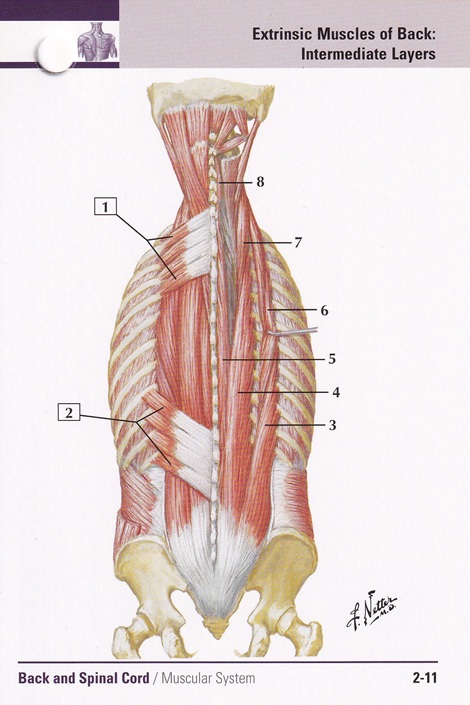
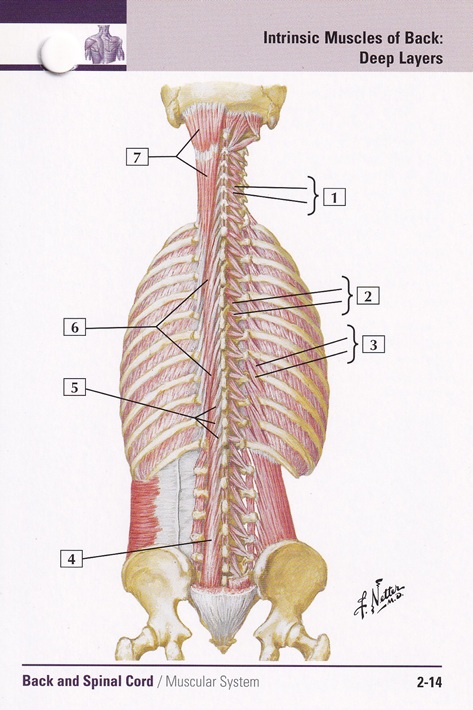
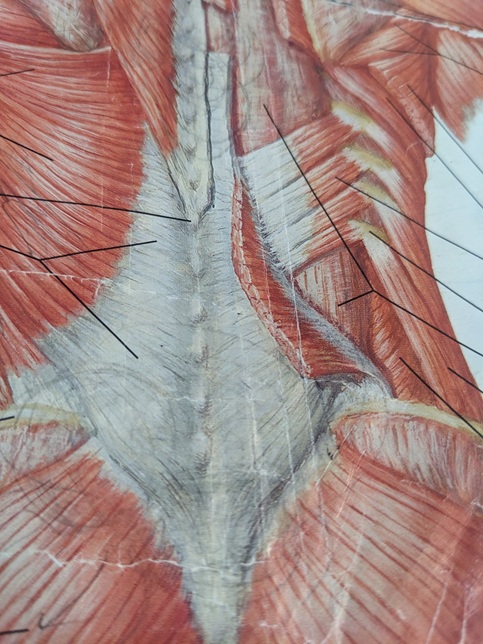
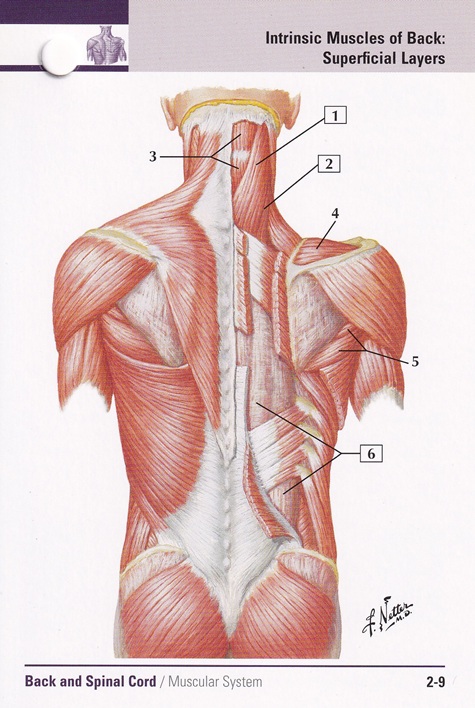
As you can see the above diagrams, our back muscles are configured with three layers. Each layers of back muscles are working together for the daily activities such sitting, standing, walking, etc.
From the deep layer of back muscles, you can see the small muscles are attached from one transverse process to another transverse process, called as the Lateral Intertransversarius.
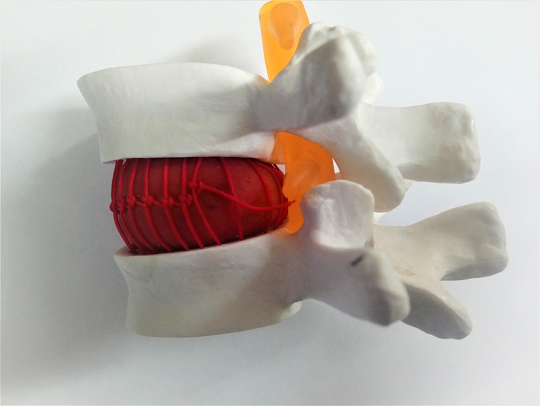
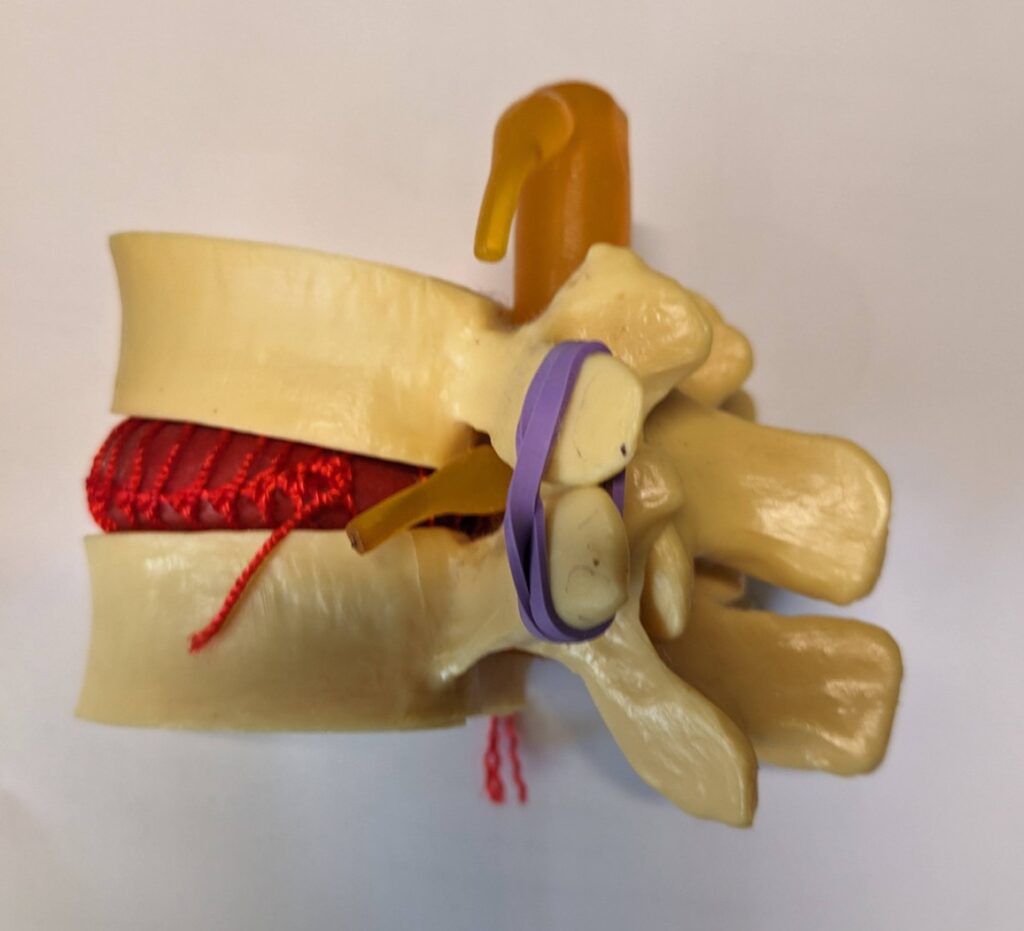
For example, by any reasons which was already mentioned from common causes, if this Lateral Intertransversarius is spasmed with muscle contraction, then the affected disc between two lumbar vertebras is bulging out at that side as the below photo.
So, what is the problem? Disc or Lateral Intertransversarius muscle? As you can see the below photo, Disc is not doing anything. Lateral Intertransversarius muscle is spasming(contracting and not relaxed) and making the disc bulging out.
Therefore, if the practitioner is able to locate and relieve the muscle spasming, and then the disc would be returned to the normal height. And the jamming of the spinal nerve would be also relieved.
– Understanding Posterior Sacroiliac Joint(called SIJ) pain
In the daily practice, Posterior Sacroiliac Joint pain is quite commonly seeing. I would like to explain why you have this problem.
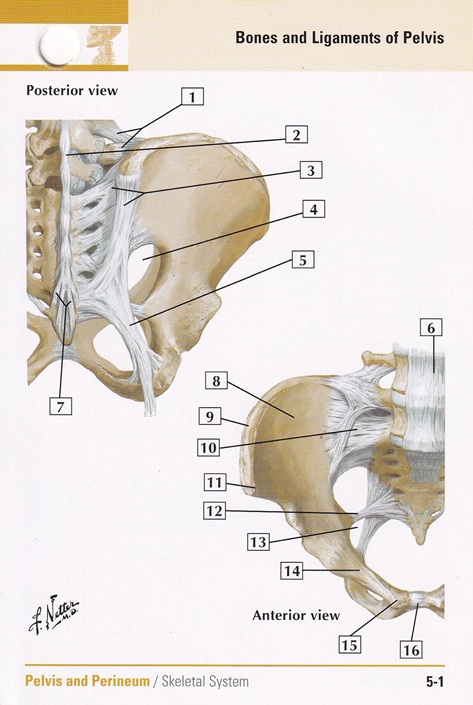
From above figure, you can see that the white colour tissue is ligament which is a connective soft tissue connecting bone and bone. In figure, No. 3 is Posterior Sacro-iliac ligament which is connecting between Sacrum and Iliac bone. And No. 5 is Sacro-tuberous ligament. Both of two ligaments are commonly complained areas in the daily practice. The patients are complaining that the pain is dull-ache and weakness when they are walking, standing, etc.
The major problem is Posterior Sacroiliac ligament and/or Sacrotuberous ligament have inflammation, called as ligament inflammation.
Usually, the ligament is very strong tissue as like tendon. However, any incidents and/or overuse may torn and/or tear the ligaments leading to the inflammation of ligament.
As you can see the above figure, the white colour is meaning no blood vessels in the ligaments. The ligaments may be healing processing with acupuncture treatments, it takes time to compare with the muscle healing. Because, the ligaments are getting the nutrients from the surrounding blood vessels for healing process.
– Understanding Posterior Sacroiliac Ligament pain
– Understanding Posterior Sacrotuberous Ligament Pain
– Understanding ASIS pain
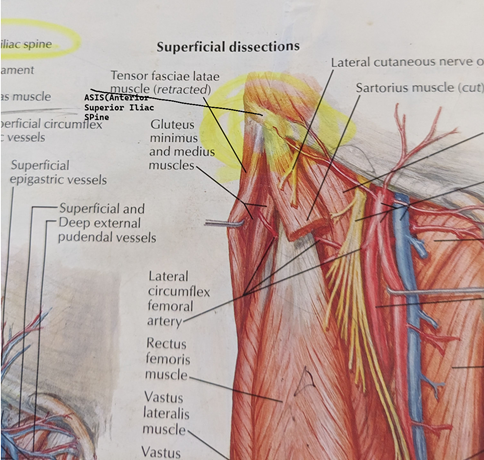
Occasionally, I am seeing the patients complaining the pain around ASIS when they are resting and/or walking. ASIS is Anterior Superior Iliac Spine where is attached with several tissues such as Inguinal Ligament, Sartorius tendon, Tensor Fasciae Latae tendon. So, by any reasons, those soft tissues are inflamed, leading to Tendonitis, Ligament Inflammation, causing the pain.
Understanding Calf Pain on Musculo-tendonous Junction(tendonitis)
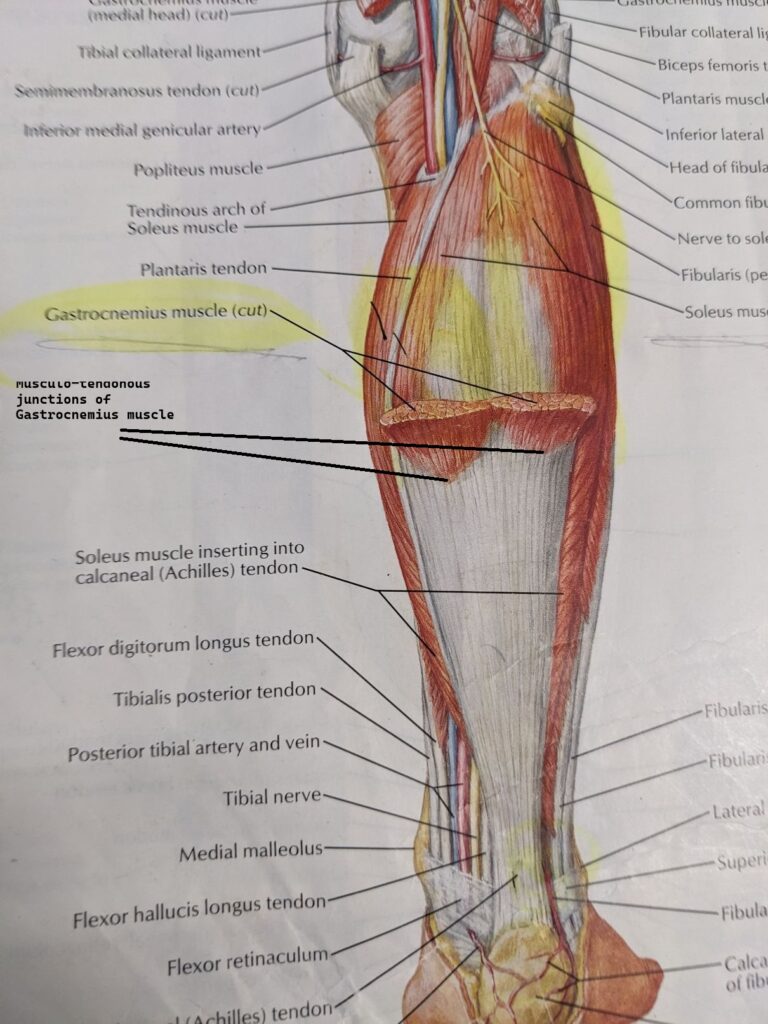
Time to time, those patients complaining the lower leg pain are coming to my clinic. As you can see above diagram, there are musculo-tendonous junction of Gastrocnemius muscles. Those areas are easily damaged with sudden movement such as turning quickly when they are doing the sports activities as like football, etc.
The muscle can contract and relax, but the tendon can’t do contract and relax.
Understanding Sacrotuberous Ligament Pain
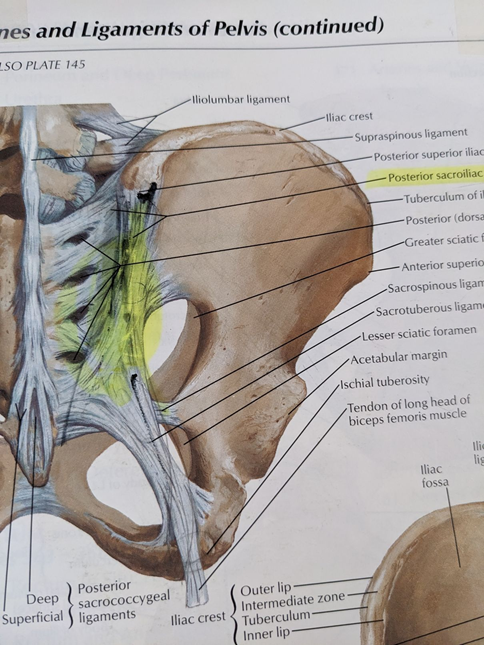
As you can see from above diagram, the sacrotuberous ligament is connecting between the posterior sacroiliac ligament to iliac crest and tendon of long head of Biceps Femoris muscle. So, it is connective tissue which is very strong and usually it can’t be damaged easily. However, any reasons such as too much stretch out, trauma, injuries may cause the torn ligament and/or inflammation of ligament.
The ligament inflammation may cause you feel weakness, pain when sitting too long, sit and stand-up, due to the fact of the sacrotuberous ligament can support your weight at sitting and standing up.
Section 2- How Acupuncture Helps
How does acupuncture work?
Time to time, even if I explained the mechanism of acupuncture in brochures etc, the patients ask me “How does acupuncture work?”
Please click below link and you’ll get the information you want.
Targeted treatment for deep, lasting relief
Acupuncture works by improving circulation, reducing inflammation, and releasing the tight muscles around the specific problematic lumbar spine and hips.
Benefits
- Reduces pain and stiffness
- Improves mobility
- Calms irritated nerves
- Relaxes deep muscle tension
- Supports long‑term recovery
Section 3 – What to Expect
After your practitioner consults with you, and then he’ll explain your conditions. And furthermore, he’ll present as follows.
- A gentle, personalised treatment plan
- Assessment of posture, movement, and pain patterns
- Comfortable, precise acupuncture techniques
- Optional herbal medicine support
Articles for BACK PAIN
This phase is coming from the recent ABC news “Back pain is the leading cause of disability and lost productivity in Australia and globally.”
It is terrible experience if you have the back pain especially at the low back. The reason is that the low back is affecting the whole body. Because we start to be walking with upright posture since we are very young when we are such as one year old. Low back has to support the lower body weight and the middle and upper body weight.
Again, it is coming from ABC news article.
“Professor Harris says MRI scans pick up the abnormalities in most people aged over 40.”
He said that “The more things you find, the more likely it is that you’ll end up with somebody wanting to treat or correct that abnormality — even though correcting that abnormality might not help the patient because it might not be associated with their pain.”
So, we might be thinking where the pain is coming from, for proper diagnosis of the pain. It might be coming from the muscular systems such as muscles, tendons, ligaments, joint capsules, and bursa. It might be coming from joint itself such as facet joints, disc. Also it might be coming from the inflammation of local muscles, nerves, and joints.
Therefore, your pain may be not coming from the abnormalities which were diagnosed by MRI, CT, X-Ray, etc, but it may be coming from other soft tissue problems such as the muscles, tendons, ligaments, joint capsules, bursa, etc.
If your acupuncturist has the proper understanding and experiences regarding upon your problems, your acupuncture practitioner may help you with this kind of pain you have.